Virginia
Virginia E-Bike Laws
Virginia adopted a three-class electric power-assisted bicycle framework in 2020 through Va. Code § 46.2-904.1, aligning with the national PeopleForBikes model used in most U.S. states. Class 1 e-bikes provide pedal-assist only and cease motor assistance at 20 mph. Class 2 e-bikes may use a throttle and also stop assisting at 20 mph. Class 3 e-bikes are pedal-assist only with assistance up to 28 mph, must carry a speedometer, and trigger the strictest operator rules in the Commonwealth. Compliant e-bikes are treated as bicycles for nearly all traffic purposes: no driver's license, registration, certificate of title, insurance, or license plate is required, and riders generally receive the same rights and duties as conventional cyclists on public roads. Manufacturers and distributors must affix permanent class labels showing classification number, top assisted speed, and motor wattage, and tampering that changes motor capability requires replacing that label. Motor wattage is capped at 750 watts under the statutory definition referenced throughout Title 46.2. Virginia does not impose a statewide helmet mandate for Class 1 or Class 2 riders, though localities may require helmets for riders 14 and younger on highways, sidewalks, and public bicycle paths under § 46.2-906.1. Class 3 is different: every operator and passenger must wear a CPSC- or ASTM-compliant helmet regardless of age, and riders under 14 may not operate a Class 3 e-bike unless under the immediate supervision of someone at least 18 years old per § 46.2-908.1. E-bikes may be ridden wherever bicycles are allowed unless a locality or state agency with jurisdiction over a path prohibits specific classes after notice and a public hearing. Class 3 e-bikes may be banned outright on shared-use paths, and natural-surface nonmotorized trails may be regulated separately. Sidewalk riding is permitted statewide for e-bikes unless a local ordinance prohibits it, with a duty to yield to pedestrians and give an audible signal before passing. Devices that exceed statutory speed or power limits fall outside the e-bike definition and may be treated as mopeds or motor vehicles with additional licensing and equipment requirements.
By eBikeQuest Editorial Team · Platform Research & Verification
Reviewed by eBikeQuest Editorial Team · Internal verification and editorial review
- Published:
- June 1, 2026
- Updated:
- June 18, 2026
- Reviewed:
- June 1, 2026
- Policy verified:
- June 18, 2026
Summary
Virginia adopted a three-class electric power-assisted bicycle framework in 2020 through Va. Code § 46.2-904.1, aligning with the national PeopleForBikes model used in most U.S. states. Class 1 e-bikes provide pedal-assist only and cease motor assistance at 20 mph. Class 2 e-bikes may use a throttle and also stop assisting at 20 mph. Class 3 e-bikes are pedal-assist only with assistance up to 28 mph, must carry a speedometer, and trigger the strictest operator rules in the Commonwealth. Compliant e-bikes are treated as bicycles for nearly all traffic purposes: no driver's license, registration, certificate of title, insurance, or license plate is required, and riders generally receive the same rights and duties as conventional cyclists on public roads. Manufacturers and distributors must affix permanent class labels showing classification number, top assisted speed, and motor wattage, and tampering that changes motor capability requires replacing that label. Motor wattage is capped at 750 watts under the statutory definition referenced throughout Title 46.2. Virginia does not impose a statewide helmet mandate for Class 1 or Class 2 riders, though localities may require helmets for riders 14 and younger on highways, sidewalks, and public bicycle paths under § 46.2-906.1. Class 3 is different: every operator and passenger must wear a CPSC- or ASTM-compliant helmet regardless of age, and riders under 14 may not operate a Class 3 e-bike unless under the immediate supervision of someone at least 18 years old per § 46.2-908.1. E-bikes may be ridden wherever bicycles are allowed unless a locality or state agency with jurisdiction over a path prohibits specific classes after notice and a public hearing. Class 3 e-bikes may be banned outright on shared-use paths, and natural-surface nonmotorized trails may be regulated separately. Sidewalk riding is permitted statewide for e-bikes unless a local ordinance prohibits it, with a duty to yield to pedestrians and give an audible signal before passing. Devices that exceed statutory speed or power limits fall outside the e-bike definition and may be treated as mopeds or motor vehicles with additional licensing and equipment requirements.
Classifications
Class 1
Pedal-assist only; motor ceases assistance at 20 mph; up to 750 watts; must meet CPSC bicycle equipment standards and display a permanent class label.
- Roads
- Allowed
- Trails
- Allowed on streets, bike lanes, and shared-use paths unless a locality or state agency prohibits Class 1 after notice and a public hearing.
- Max assist
- 20 mph
Class 2
Throttle or pedal-assist; motor ceases assistance at 20 mph; up to 750 watts; must meet CPSC bicycle equipment standards and display a permanent class label.
- Roads
- Allowed
- Trails
- Allowed where bicycles are permitted unless a path manager prohibits Class 2 after notice and a public hearing; natural-surface nonmotorized trails may have separate rules.
- Max assist
- 20 mph
Class 3
Pedal-assist only; motor ceases assistance at 28 mph; up to 750 watts; must include a speedometer and permanent class label.
- Roads
- Allowed
- Trails
- May be prohibited on any shared-use path by the controlling locality or agency; verify posted rules before riding rail-trails or park paths.
- Max assist
- 28 mph
Trail access
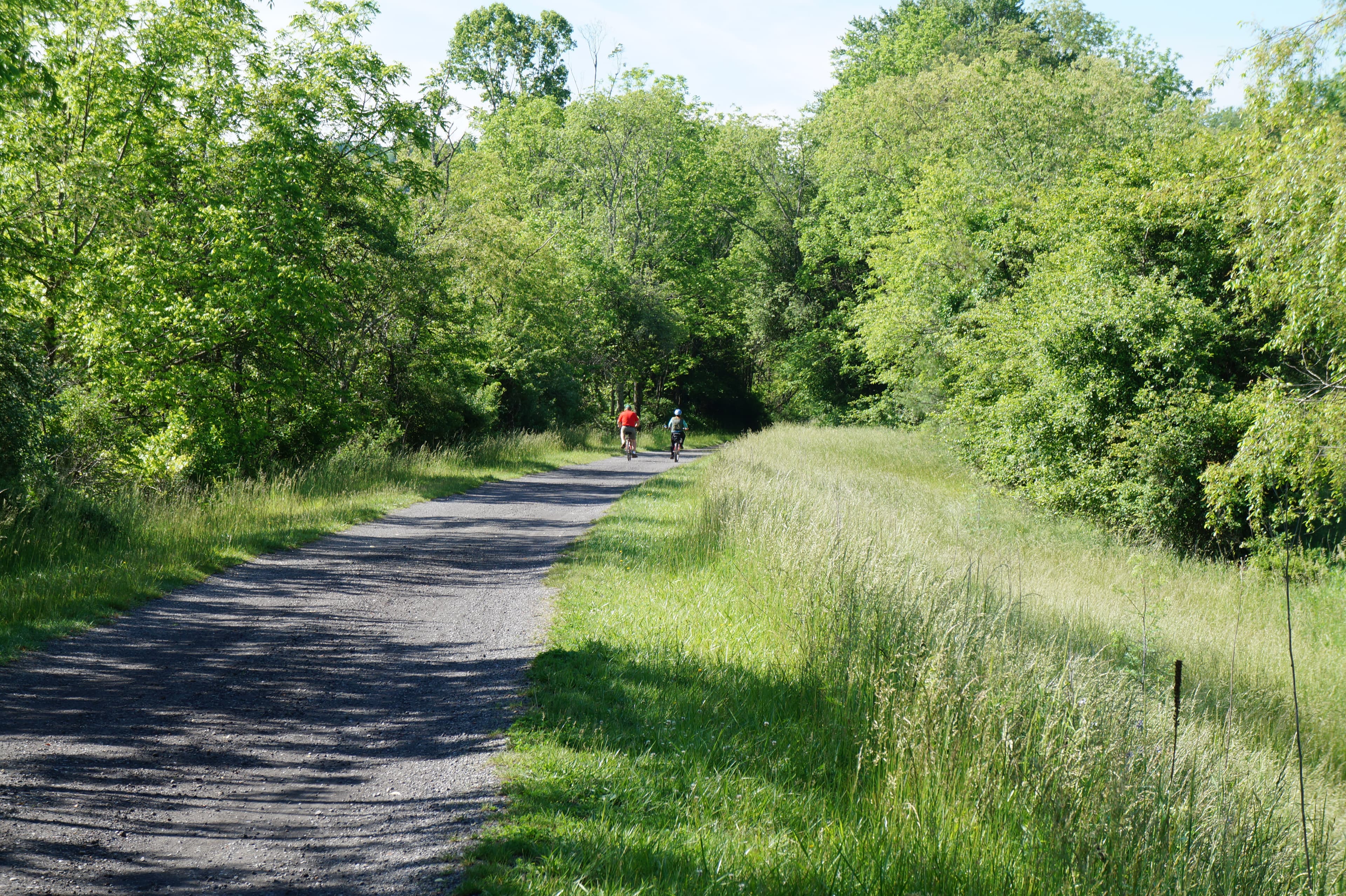
Virginia's default rule under § 46.2-904.1(F) is permissive: electric power-assisted bicycles may be ridden anywhere bicycles are allowed, including streets, shoulders, bicycle lanes, and bicycle or shared-use paths. That broad access makes Virginia relatively e-bike friendly on paper, but land managers retain significant authority to narrow it. A locality or state agency with jurisdiction over a bicycle or shared-use path may prohibit Class 1 or Class 2 e-bikes after providing notice and holding a public hearing if it finds a restriction necessary for public safety or legal compliance. Class 3 e-bikes face a stricter default: the same authorities may prohibit Class 3 on shared-use paths without needing to justify a safety finding beyond their general path authority. Separately, agencies controlling natural-surface trails designated as nonmotorized—trails with a tread made by clearing and grading native soil without added surfacing—may regulate e-bikes of any class on those routes. Federal lands inside Virginia add another layer. National Park Service, U.S. Forest Service, and other federal units set their own e-bike policies that may be tighter than state law regardless of class label. Popular Northern Virginia destinations such as the Mount Vernon Trail, W&OD Trail, and parkland in Fairfax, Arlington, and Loudoun counties each publish their own e-bike rules; riders should check the managing agency before assuming state-default access. On sidewalks, § 46.2-903 and § 46.2-904 allow e-bikes on sidewalks unless a local ordinance prohibits them; riders must yield to pedestrians and signal before passing. State parks managed by the Virginia Department of Conservation and Recreation generally follow bicycle rules on paved paths but may restrict e-bikes on backcountry or natural-surface routes. When planning a ride, confirm both the statutory class of your bike and the posted policy of the specific trail network.
Requirements
- Helmets
- Class 3 operators and passengers must wear CPSC- or ASTM-compliant helmets at all ages. Localities may require helmets for riders 14 and younger on any e-bike class.
- Age
- Riders under 14 may not operate a Class 3 e-bike unless under immediate supervision of a person at least 18 years old.
- Registration
- Not required
- Insurance
- Not required
FAQ
Yes. Virginia recognizes Class 1, Class 2, and Class 3 electric power-assisted bicycles under Va. Code § 46.2-904.1 when they meet motor wattage, speed, labeling, and equipment requirements.
Sources
- Virginia Code § 46.2-904.1 – Electric power-assisted bicycles (opens in new tab) (accessed 2026-06-18)
- Virginia Code § 46.2-908.1 – Speed limits and age restrictions (opens in new tab) (accessed 2026-06-18)
- Virginia Code § 46.2-906.1 – Local helmet ordinances (opens in new tab) (accessed 2026-06-18)
- Virginia Code § 46.2-904 – Sidewalk and shared-use path operation (opens in new tab) (accessed 2026-06-18)